
Sex Offender Checks in Mifflin County
The Pennsylvania State Police Megan's Law Public Website is the authoritative public source for a Mifflin County registry check. PSP maintains the database and its public profiles. Mifflin County does not publish a separate local registry map. The county's Correctional Facility performs local Megan's Law processing, but a public search still runs through PSP.
Use county search for broad Mifflin County awareness, name search when a person is already known, and ZIP or location search for an area. Each route has limits. A record can change after a move, verification, or legal status change. Someone absent from results may be registered in another jurisdiction, outside public disclosure, or out of compliance. No-result screens are not safety certificates.
Mifflin County Registry Processing
Mifflin County Correctional Facility at 103 W. Market Street in Lewistown is the local registration and verification processing point named by the county. Registrants should call 717-248-1130 to confirm hours, appointment needs, and required identification. The public county page lists no registration fee. For suspected noncompliance or an immediate threat, contact local police or PSP instead of confronting anyone.
The division of work matters. MCCF accepts the local processing contact, but PSP decides what the public site displays and how a profile is classified. A question about an appointment, identification, or the local verification counter belongs with MCCF. A question about a search result, public field, or suspected database error belongs with PSP or law enforcement. Keeping those roles separate avoids treating the correctional facility as a second public registry.
MCCF Megan's Law Processing
103 W. Market St.
Lewistown, PA 17044
717-248-1130
Call ahead for verification-site details and current document requirements.
How to Search the Pennsylvania State Police Megan's Law Public Website
Start with a search route that fits the known facts. County and ZIP tools work for place-based awareness. A name query works best when identity is already known. Location pins are approximate, so read the profile before making any match. A careful Mifflin County sex offender search follows these steps:
- Open the PSP Megan's Law portal and read its conditions and public-use notice.
- Select Mifflin in county search, or use name, municipality, ZIP, or address controls when those facts fit the search.
- Review the list or map and compare aliases, photograph, and physical details. Never match a person from a shared name alone.
- Open the official profile and read the classification, registration period, offense, address context, verification details, and any compliance notice.
- Use NSOPW for other states, and report a possible error or noncompliance to law enforcement.
The PSP Mifflin County search form is the direct area filter.
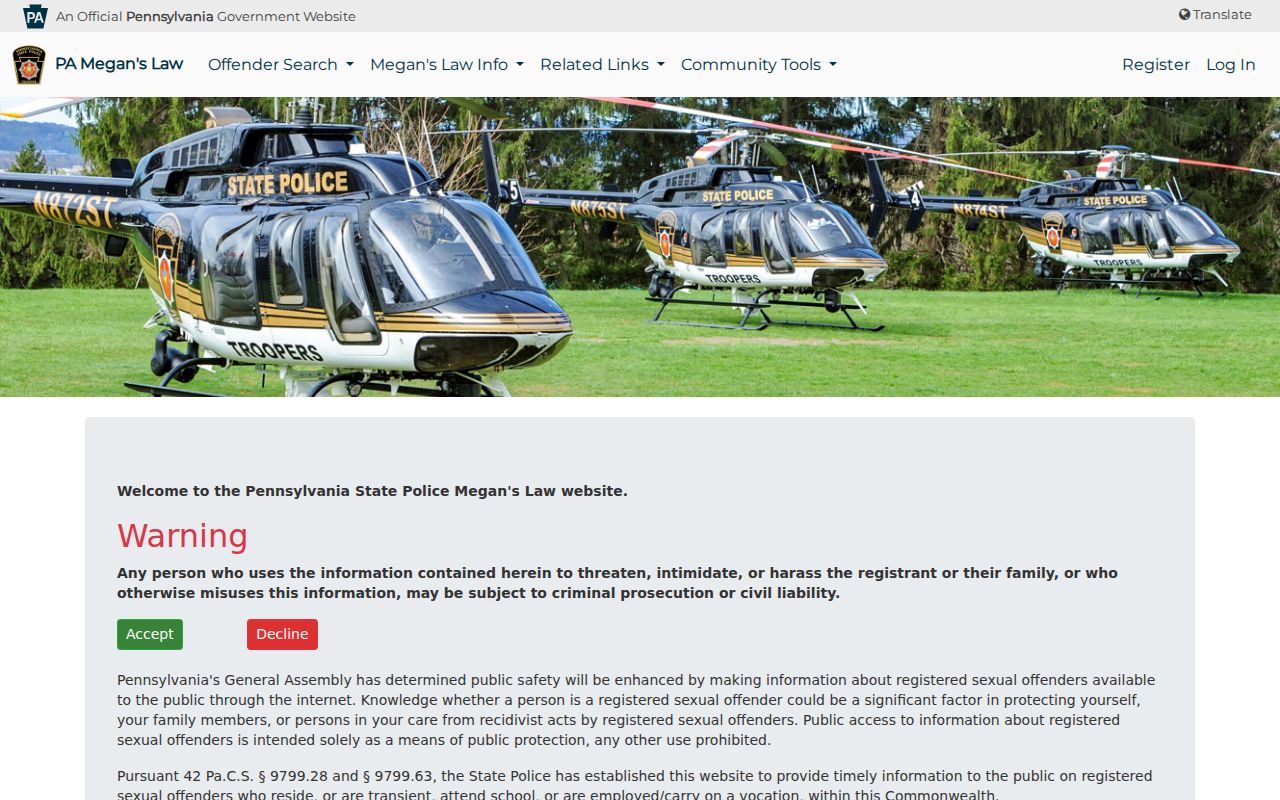
Its county selector limits the public result set to the portal's Mifflin County criteria rather than creating a separate county database.
| Search route | Fields or controls | Use and limits |
|---|---|---|
| Name | Last name, first name | Surname is the main input; follow portal rules for partial names. |
| County | County dropdown | Select Mifflin for associated public records. |
| Municipality | Municipality selector | Choose a listed Pennsylvania municipality. |
| ZIP | ZIP code, distance or radius where shown | Map and list presentation may vary. |
| Location | Address or location parameters | Geocoding is approximate, not an exact boundary. |
| Results | Map, list, profile link | Open the official profile for the source details. |
Mifflin County Registry Map Limits
A pin is a search aid, not an exact safety line. Mailing addresses, municipal borders, relocation, map geocoding, and verification timing can affect its placement. Pennsylvania does not create one simple statewide distance rule that applies to every registrant near every school or park. Individual supervision terms and other lawful rules may differ, so do not invent a universal radius.
The official PSP ZIP and proximity search shows the proper place-based controls.
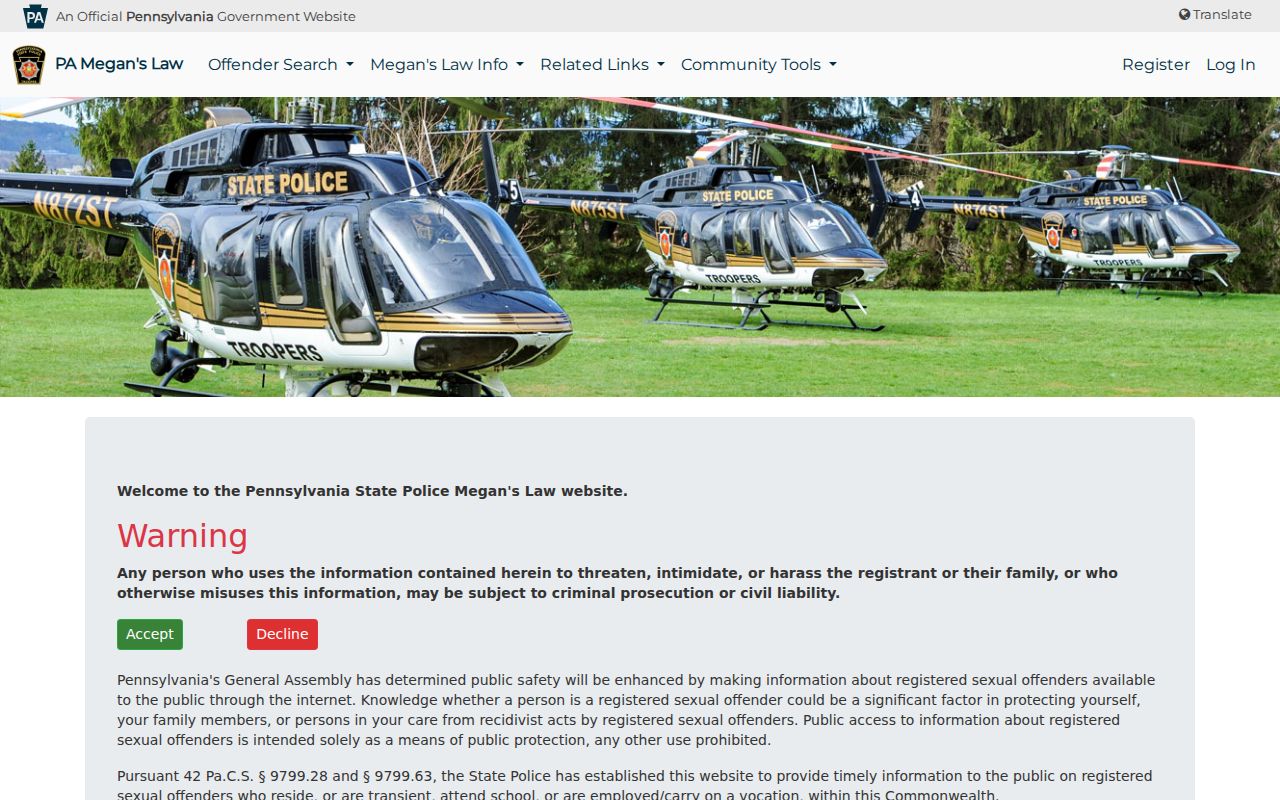
The screen supports an area search, but the underlying profile remains the source to read and verify.
Inside a Registry Profile
PSP publishes fields allowed by Pennsylvania law and applicable to the registration category. The exact set can vary. Mifflin County searchers should compare the profile as a whole, especially aliases, image, physical traits, offense, and status. The research retained no private registrant's name or address as a sample.
| Identity | Name, aliases, and age or date-of-birth information allowed for public display. |
|---|---|
| Photo and descriptors | Photograph, sex, race, height, weight, eye and hair color, and marks or tattoos. |
| Location | Residence or transient status, municipality, county, ZIP, and authorized school or work data. |
| Vehicle details | Vehicle descriptions and license information where the statute authorizes display. |
| Registration | Tier or classification, registration period, verification information, and current status. |
| Offense | Description, statute, conviction or adjudication date, and jurisdiction. |
| Notices | Compliance or wanted information when PSP makes it public. |
The PSP public-profile explanation adds context for what the registry publishes.
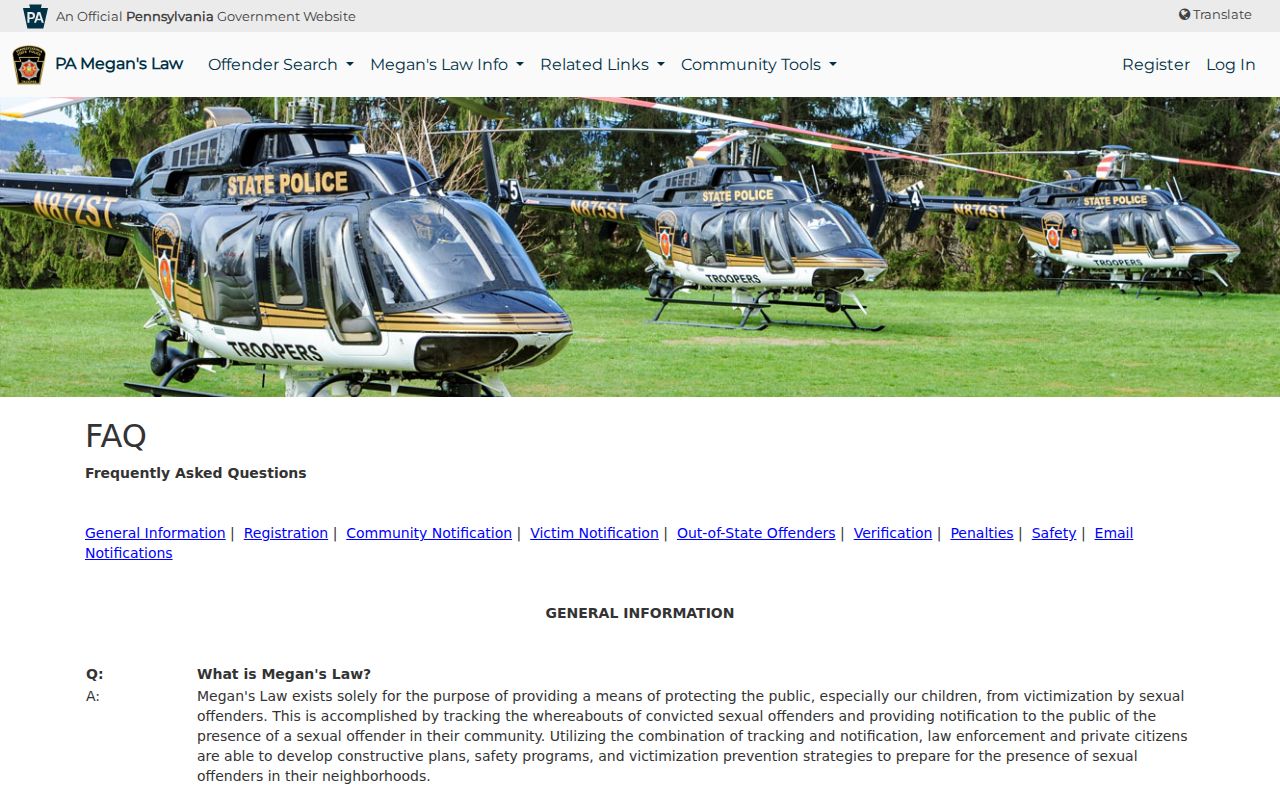
That official explanation is safer than treating a single profile field as a complete account of identity or legal status.
Mifflin County and NSOPW
The PSP portal is the source for Pennsylvania registry data. The U.S. Department of Justice National Sex Offender Public Website, or NSOPW, supplies the cross-state layer. Use it when a search may extend beyond Mifflin County or Pennsylvania. NSOPW relies on participating jurisdictions' records, so the jurisdiction that owns a result remains the place to verify it.
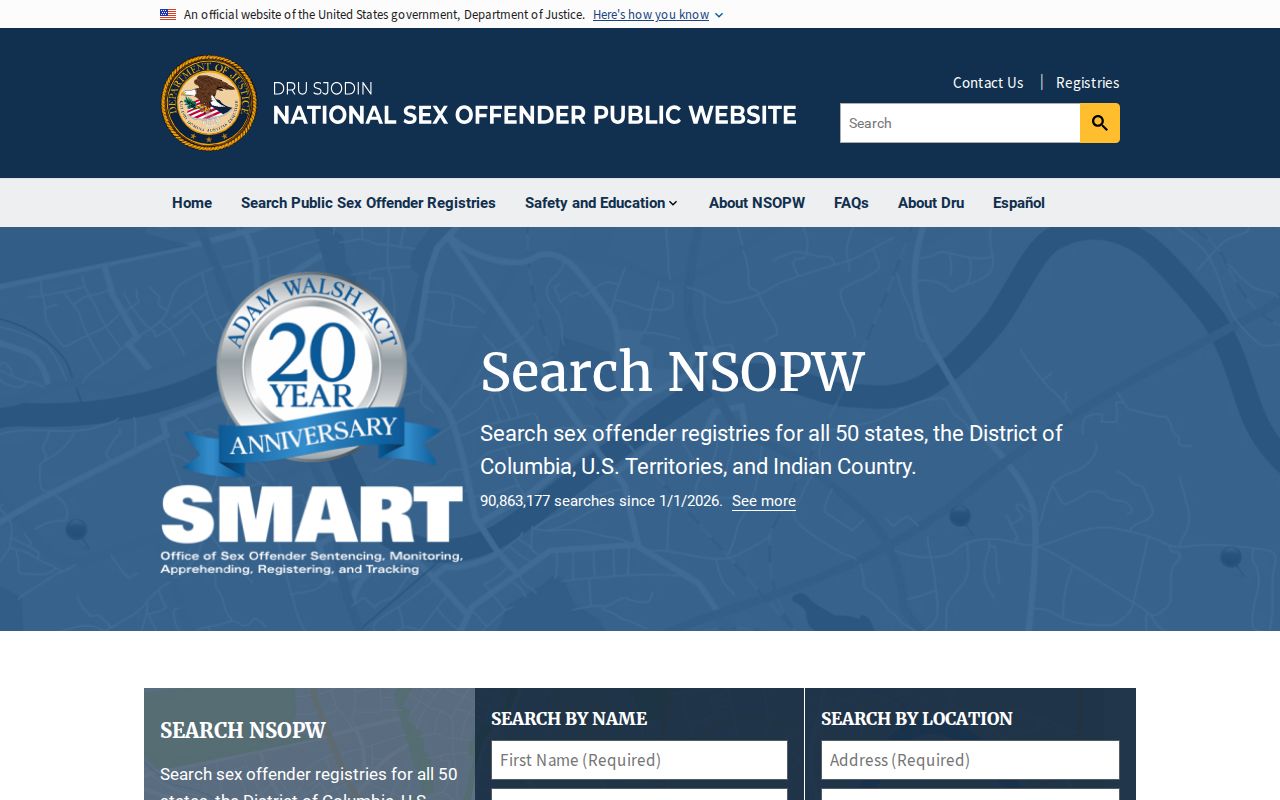
The national interface broadens the geography but does not replace PSP's source profile for a Pennsylvania result.
Use the same identity discipline on both systems. Compare aliases, image, physical descriptors, and jurisdiction. Search dates matter because address and verification data can change. Save the official context needed for a safety plan, then return to the source agency if anything appears stale or inconsistent.
Pennsylvania Registration Levels and Requirements
Pennsylvania registration duties vary by tier and statutory category. Tier I is 15 years, not 10. Tier II lasts 25 years, and Tier III is lifetime. Older schemes and special categories add different terms. Verification can be annual, semiannual, quarterly, or monthly. Tier describes the legal registration category tied to the qualifying offense; it is not an individual prediction of current danger.
| Classification | Duration | In-person verification |
|---|---|---|
| Tier I | 15 years | Annually |
| Tier II | 25 years | Semiannually |
| Tier III | Lifetime | Quarterly |
| Prior-scheme ten-year registrant | 10 years | Annually |
| Prior-scheme lifetime registrant | Lifetime | Annually unless another class requires more |
| Transient offender | Applicable statutory term | Monthly |
| Sexually Violent Predator | Lifetime or statutory term | Quarterly |
The PSP registration rules page is the current source for tier terms and reporting duties.
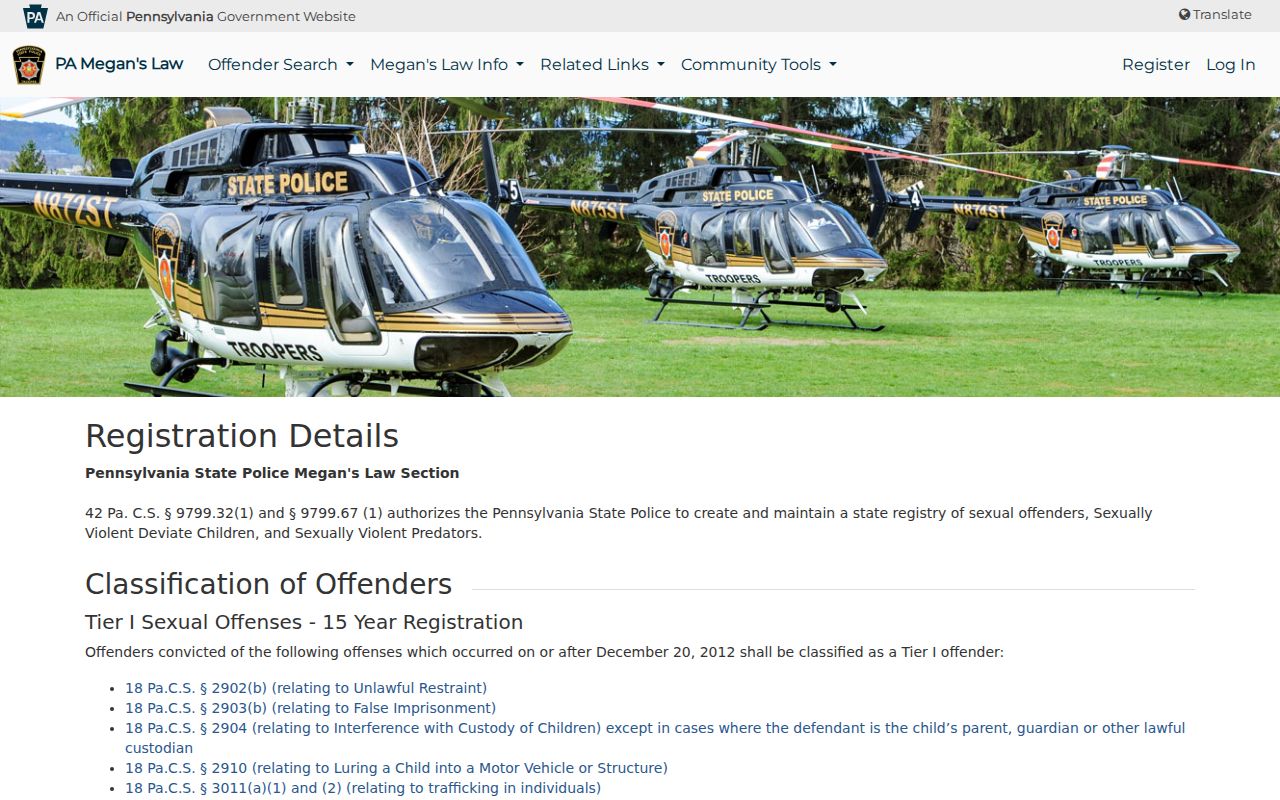
The official chart should be checked when a Mifflin County profile's term or verification schedule raises a question.
Mifflin County Registry Changes
For offenses after December 20, 2012, changes in name, residence or transient status, employment, student status, phone, vehicle, temporary lodging, internet identifiers, or occupational licensing generally require in-person reporting within three business days. Tier II and Tier III registrants who meet the stated compliance conditions may use PSP telephonic verification for some periodic checks after the annual in-person appearance. The number is 1-855-791-1990, and it cannot be used to report changes.
If Mifflin County registry information looks outdated, do not try to correct it through social media or by confronting the person. Contact PSP or use the official county police directory to reach local law enforcement. Address verification and legal status changes can alter search results. The local MCCF processing point can confirm its own registration procedure, but PSP controls the public database.
Mifflin County registration questions should stay with MCCF, while public-profile questions belong with PSP.
Mifflin County Tiers and Risk
Tier and present risk are different concepts. A Pennsylvania tier follows the qualifying offense and statutory classification. It is not a lay assessment that one Mifflin County registrant is more likely than another to offend today. Likewise, a wanted or noncompliance notice is a specific status field, not a license for private action.
A public profile also differs from a court docket. The registry summarizes the public registration facts. UJS may show the underlying prosecution if that case remains publicly accessible. Restricted, sealed, juvenile, and limited-access rules can affect court visibility. Read each system for the job it performs.
The official PSP name search supports identity-focused checking.
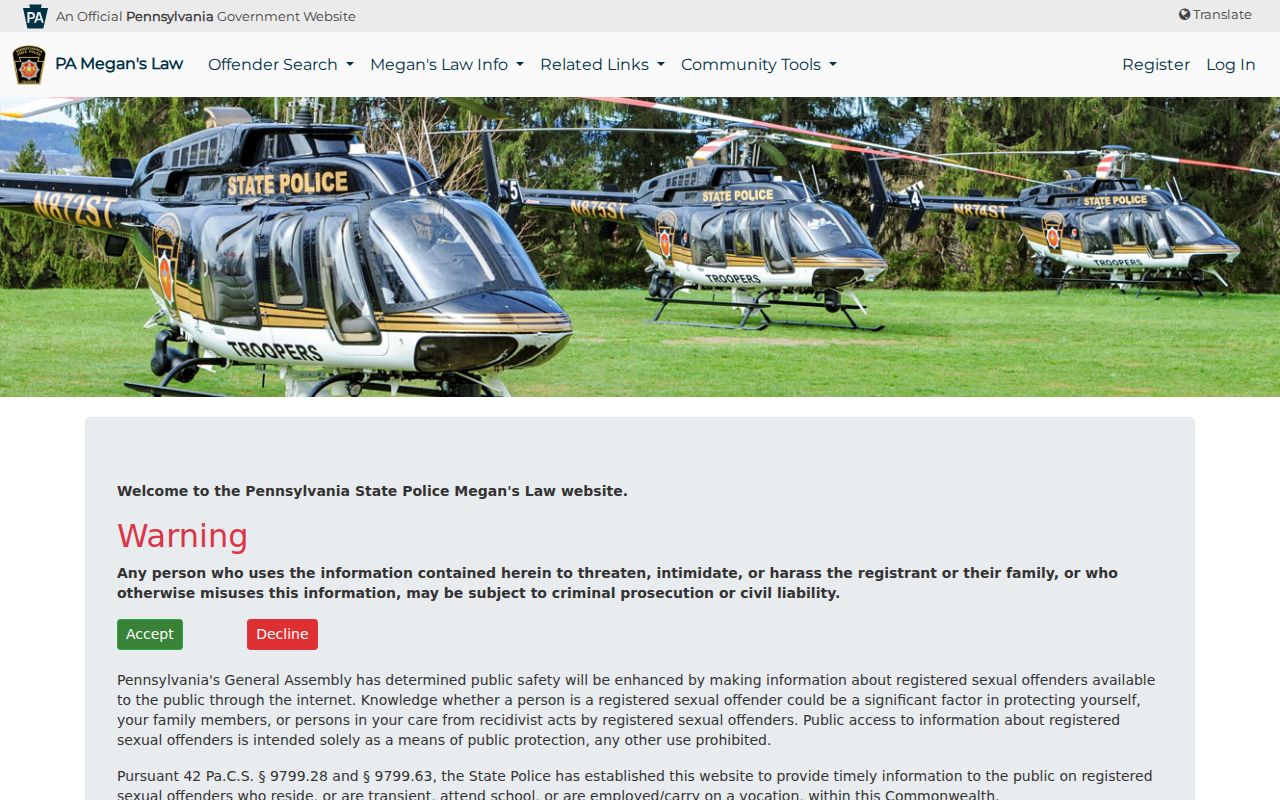
Its result should be matched with profile details, not treated as a finding based on a common surname alone.
Community Notification and Lawful Use
The public registry exists for protection and informed community awareness. Use its official profiles to support a personal or family safety plan. Report suspected inaccuracies or noncompliance to PSP or local police. Do not confront a person, publish private details as spectacle, or turn a Mifflin County registry result into a threat.
Registry misuse warning: Using registry information to threaten, intimidate, harass, or commit another crime is unlawful and can be prosecuted under Pennsylvania law. See 42 Pa.C.S. §§ 9799.28 and 9799.63 for the public-information and lawful-access boundaries.
Community notification does not make every fact about a registrant public. PSP and Pennsylvania statute control who appears and which fields can be seen. Respect those limits. The Mifflin County department directory can confirm current county contacts. If immediate danger exists, call law enforcement rather than relying on an online profile or attempting direct contact.